
Beyond the Open House: How to Read a Desert Home Like a Pro
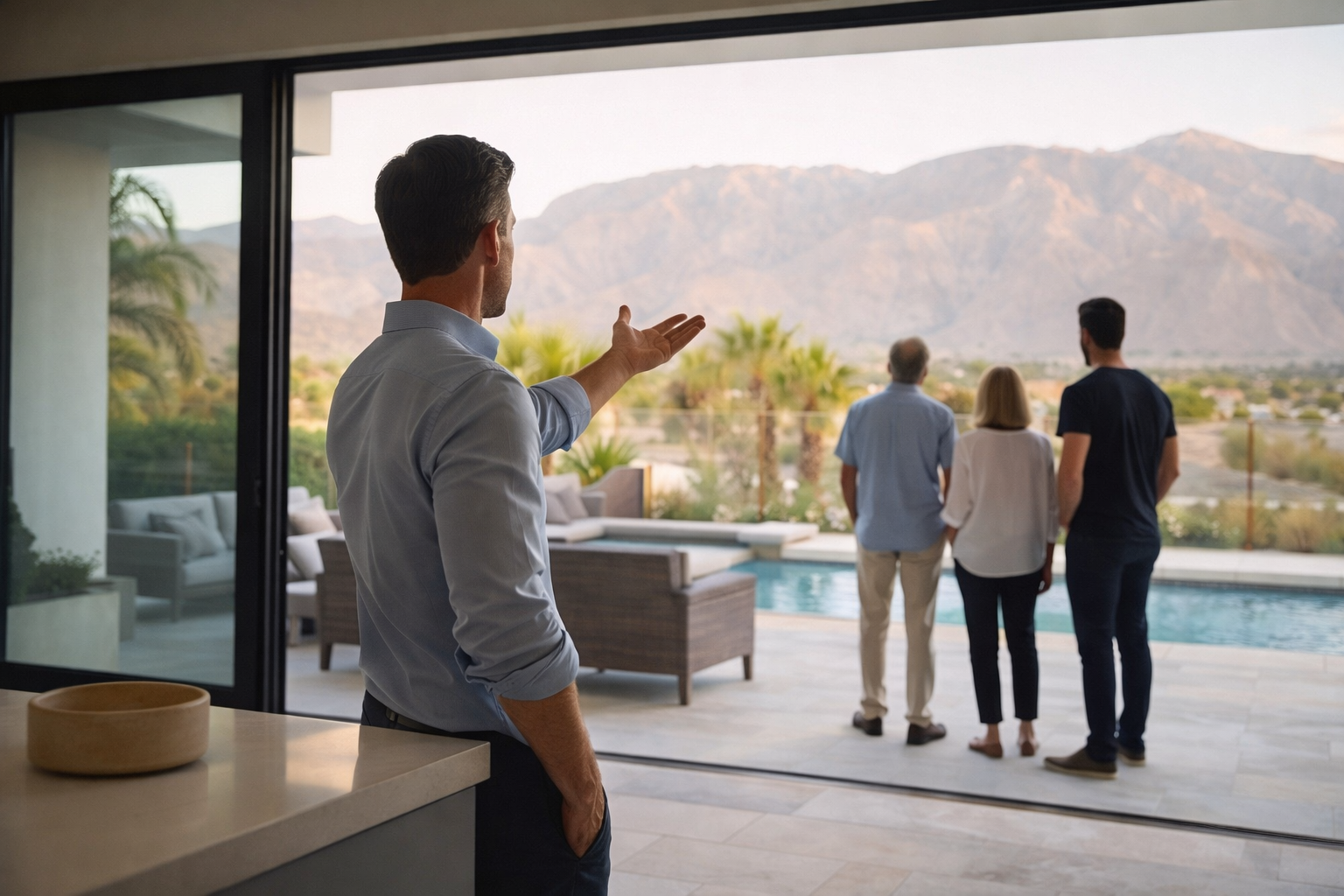
Most buyers know within the first minute if they like a home.
The staging is clean, the pool is sparkling, and the mountains are framed just right.
But there’s a difference between a home that photographs well… and one that actually lives well.
After spending time walking homes across the Coachella Valley, I’ve learned that the difference usually comes down to things you don’t immediately see.
In the desert, it’s less about finishes — and more about how the home works with the environment.
Here’s what I look for when I walk a property.
1. Orientation — Where the Sun Actually Hits
In the desert, the sun matters more than anything else.
Not all pools, patios, or backyards are equal — it depends entirely on exposure.
- South-facing tends to be the most balanced — usable in winter, manageable in summer.
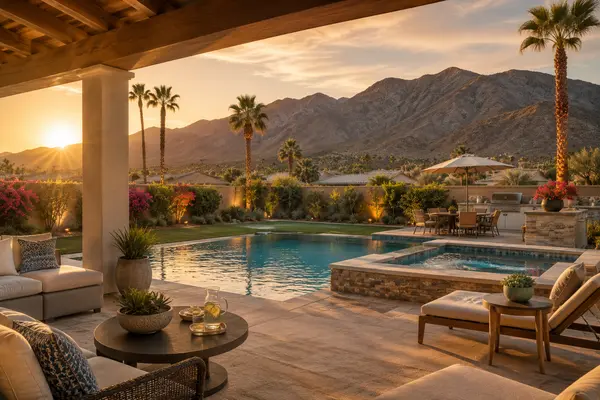
- West-facing can look beautiful at sunset, but it often gets intense afternoon heat.
What to pay attention to:
- Where is the sun at 2–4 PM?
- Is there usable shade, or just open exposure?
- Do the overhangs actually protect the interior from heat?
This is one of the biggest factors in how comfortable a home feels day-to-day.
2. Outdoor Space — Usable vs. Just Beautiful
Many backyards in the desert look great in photos.
But not all of them are designed for use.
Things I look for:
- Is there built-in shade (not just umbrellas)?
- Is there a place you’d naturally sit during the day?
- Does the outdoor space connect easily to the kitchen or living area?
In the desert, people actually live outside — so the space has to function, not just impress.
3. Indoor–Outdoor Flow
You’ll see “indoor-outdoor living” in almost every listing.
But in practice, it varies a lot.
What makes a difference:
- Easy transitions (not awkward steps or heavy sliders)
- Clear sightlines from kitchen → patio → pool
- A layout that naturally moves you outside
The best homes don’t make you think about it — you move between spaces without effort.
4. Noise & Wind (The Hidden Layer)
This is something most buyers don’t catch — but it matters.
During a showing, I’ll often pause and listen.
What to check:
- Road noise (even faint background hum)
- Golf course maintenance early in the morning
- Wind exposure
You can usually spot wind patterns, too:
- Leaning trees
- Sand buildup
- Worn landscaping
These are small things — but they affect how a home feels over time.
5. Updates vs. Systems
It’s easy to focus on what’s new visually.
But in the desert, the systems matter just as much — if not more.
Things worth checking:
- Age of HVAC systems
- Window quality
- Insulation
A beautifully updated home that isn’t built to handle heat can become uncomfortable — and expensive — quickly.
6. The 5:00 PM Test
This is something I always come back to.
Try to imagine the home at the end of the day.
- Where would you sit?
- Is the space shaded or still holding heat?
- Does it feel calm?
That moment — late afternoon into evening — is when desert homes either work… or don’t.
A Different Way to Tour Homes
Most of these details don’t show up online.
But once you start noticing them, touring homes becomes a very different experience.
You move from:
👉 “Do I like this?”
to
👉 “Will this actually work for me?”
If You’re Exploring the Desert
I’m always happy to walk homes with you and point these things out in real time.
Because once you see it, you can’t unsee it — and it changes how you evaluate everything.
Recent Posts