
Signs a Desert Second Home No Longer Fits the Life It Was Bought For
Signs a Desert Second Home No Longer Fits the Life It Was Bought For
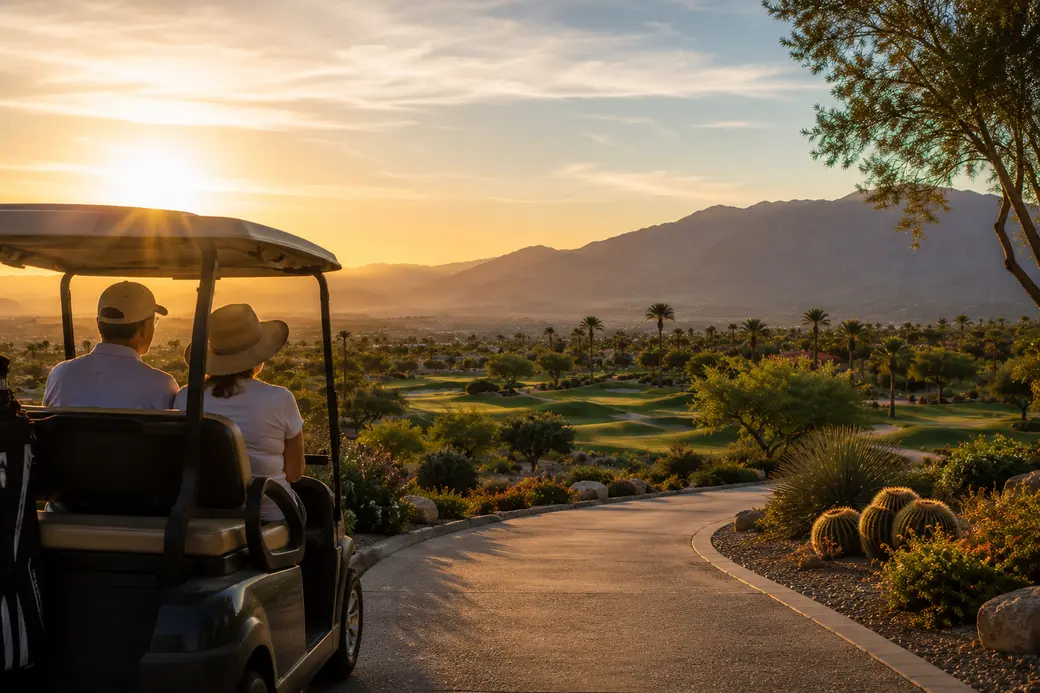
There was a time when the desert home made perfect sense.
The winters felt longer somewhere else. The pace of life felt heavier. A place in the desert represented something that just fit—sunshine, the heritage of the game, effortless entertaining, and a slower rhythm that felt deeply earned after years of intensity and responsibility.
For many owners, these estates were never simply investments. They were lifestyle decisions tied to a specific, vibrant chapter of life. And for years, they served that purpose beautifully.
But lately, I’ve been having more quiet conversations among longtime desert homeowners—particularly within the private gates of luxury golf and club communities throughout the Coachella Valley. These aren't conversations driven by market urgency or financial strain.
They are driven by reevaluation.
When a property transitions from a sanctuary of relaxation into a logistical obligation, the signs are rarely loud. They accumulate quietly.
1. The Home Is Used Less — But Maintained the Same
The first sign is purely mathematical, though it begins subtly. The home remains pristine. The club is still familiar. The routines are intact. But the actual usage footprint has shifted.
Trips become shorter. The seasonal arrival gets pushed back a few weeks; the departure happens a few weeks earlier. Owners find themselves splitting time differently—diverted by international travel, grandchildren, or competing priorities in other climates.
Yet the operational reality of a luxury estate does not accommodate a shorter calendar. Landscaping, dual-HVAC oversight, pool chemistry, security checks, and seasonal prep continue demanding identical attention. Over time, an empty custom home can quietly transform from an oasis of peace into an operationally heavy enterprise that requires constant remote management.
2. The Social & Generational Shift
A club community is a social ecosystem, and over a decade, ecosystems evolve.
Often, it isn't the physical property that changes, but the life surrounding it. The core group of friends who used to gather on the terrace at sunset begins to scatter. The competitive drive that made a 7,000-yard course essential gently gives way to a preference for a quiet short course, or perhaps racquet sports and wellness take center stage.
Simultaneously, a bittersweet realization emerges regarding the next generation. The children and grandchildren for whom the bunkrooms and expansive pools were built have grown. They have their own careers, their own schedules, and their own travel preferences.
The home that was envisioned as a permanent generational anchor is suddenly too quiet, too often. Acknowledging this can feel surprisingly emotional because these homes hold identity and memories far heavier than their financial value.
3. The Shift from Asset to Anchor: The Desire for Frictionless Living
As life moves into its next iteration, the definition of luxury changes. It stops being about square footage and begins being about simplicity.
Managing a large, custom second residence from another state eventually introduces a subtle, persistent friction. Coordinating multiple vendors, overseeing unexpected mechanical repairs during the off-season, and navigating travel logistics can begin to feel less like a lifestyle and more like a second job.
The conversation here is rarely about "downsizing" in the traditional sense; it is about right-sizing intentionally. It is the realization that true luxury in this chapter is a "lock-and-leave" reality—a property that delivers the exact same dramatic mountain views and club amenities, but with zero operational noise. It is about removing the friction before it becomes a burden, while there is still complete freedom to make thoughtful, unhurried decisions.
4. The Question Quietly Changes
At some point, the internal dialogue stops being: “Should we sell the house?” And becomes: “What role should this asset play in the next decade of our lives?” For some owners, the answer is to keep it but restructure its operations.
For others, it means repositioning that capital from a high-maintenance custom estate into a streamlined, modern villa, or into assets that require little attention.
Ultimately, these decisions are rarely dictated by the market. They are driven by alignment. Does the property still support the way life is actually being lived today, or is it protecting a lifestyle that has already been outgrown?
5. Ownership Starts Feeling More Intentional
The owners who navigate these transitions most gracefully are never reacting to pressure. They simply choose to audit their real estate portfolios with a clear eye:
- They measure how often the property is truly being enjoyed versus how often it is simply being maintained.
- They evaluate whether the club's culture still aligns with their daily rhythm.
- They calculate the ownership costs in terms of mental bandwidth, rather than just the monthly dues.
- And they look ahead, ensuring their real estate matches the life they want tomorrow, not the life they lived yesterday.
This kind of reflection is becoming increasingly common across the Coachella Valley's top-tier markets. Not because the desert has lost its luster—in fact, our enclaves of privacy and space are more valuable than ever.
But because ownership itself must evolve alongside life. And sometimes, the most sophisticated real estate decisions are made long before a property ever hits the MLS.
Recent Posts